

|
~ Church of St. John~ |
|
~ Church of St. John~ |



|
Church of St. John Following the assassination of St. Paul, St. John (who came to Ephesus with the Virgin Mary) assumed the authority over all churches in Ephesus. He was named as the Apostle Of Asia and he continued to spread Christianity. He was said to have died in Ephesus “of a great old age,” at the beginning of the second century. He wrote four books: The Gospel Of St. John, The Three Epistles Of St. John and The Book Of Revelation. This Church Of St. John was originally built in the 4th century with a wooden roofing on Ayasuluk Hill, on the site where John used to live. The church was built around the monument which is erected on the grave where he is believed to have been buried. The main entrance to the church is through the Pursuit Gate. It had several friezes which adorned the archway of the gate, and they are now at Wobburn Abbey in the U.K. The friezes show Achilles chasing Hector during the War Of The Trojans. Ephesus was partially destroyed three times over by earth quakes in 527-565 AD. When Ephesus was living through it’s third age, a domed Basilica (the ruins of which we see today) was built instead of the original church. The Basilica of St. John was built by Emperor Justinian (533-564 AD) and his wife Theodora. At the time of the Middle Ages, St. John's Basilica was considered one of the most holiest of sites of Christianity and it was used as a popular place of pilgrimage. |
|
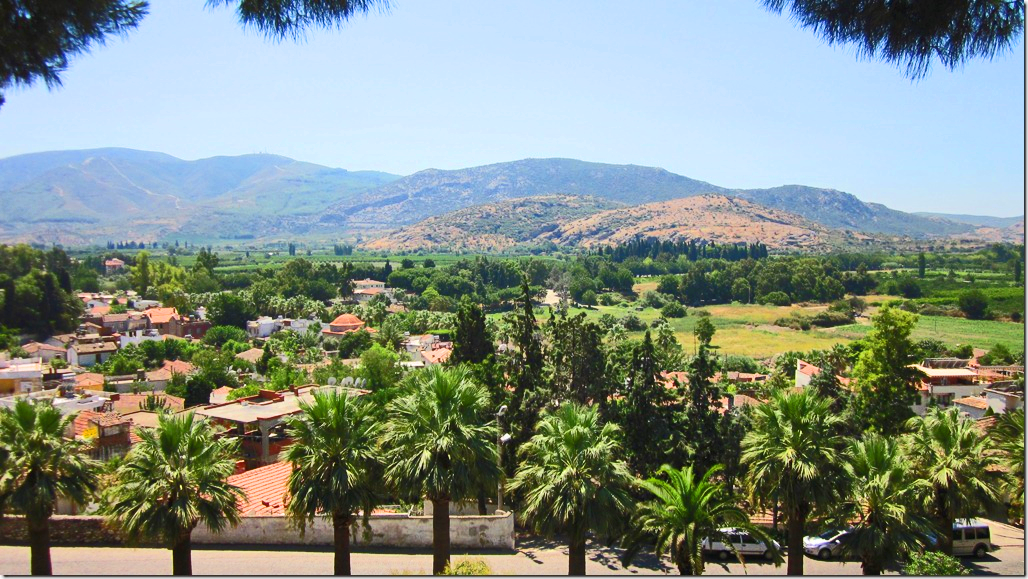
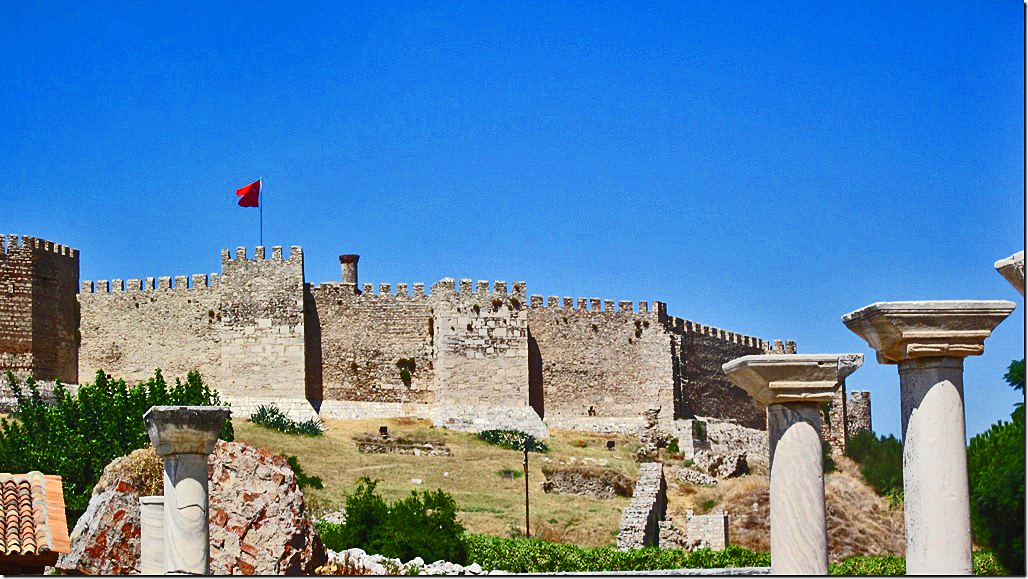
The first photo is looking over Ephesus from St. John’s church on Ayasuluk Hill. On the left you can just see the road that leads up to the House Of Mary. |
|
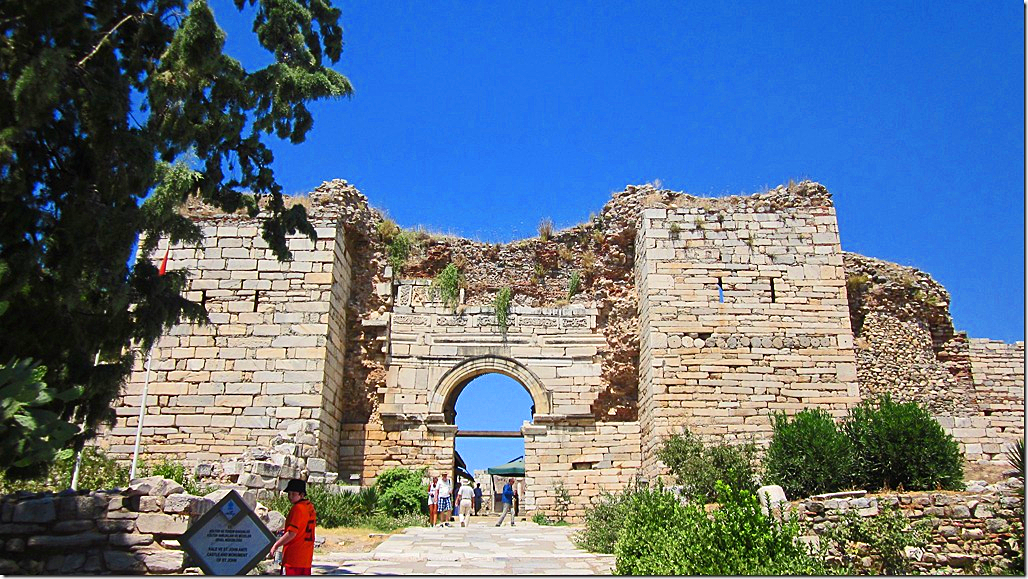
The main entrance to the church is through the ‘Pursuit Gate.’ This leads to the Basilica of St. John and his tomb. |
|
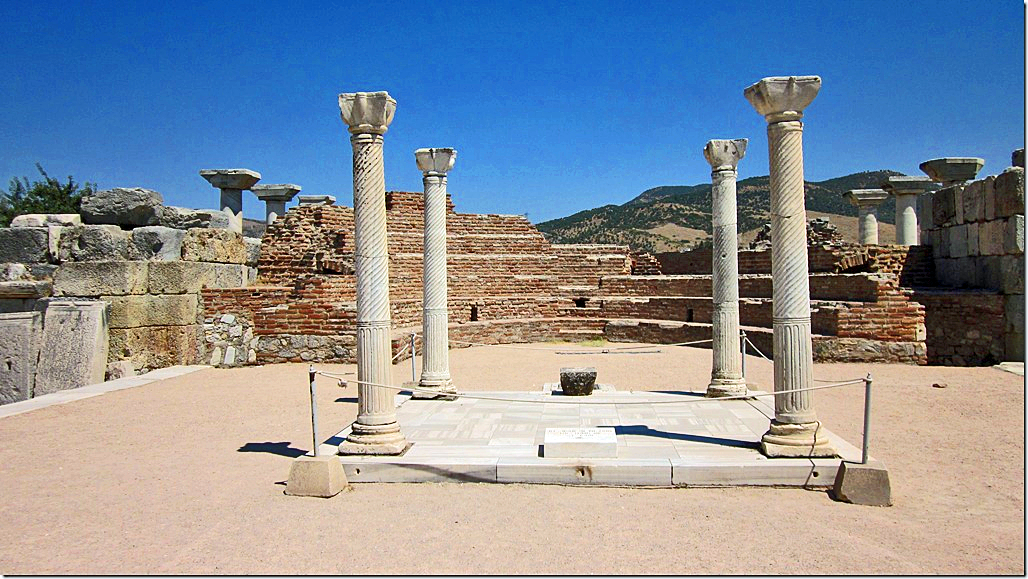
Tomb of St. John. It was believed that the dust coming out of the hole in the burial chamber below ground had healing powers. |
|
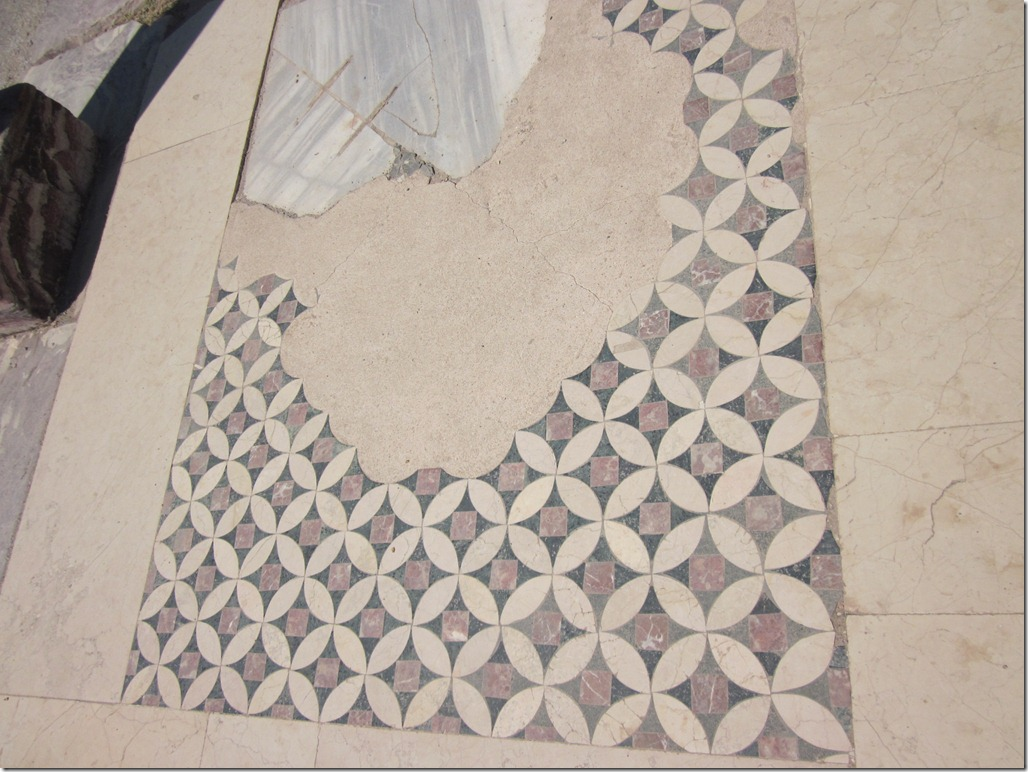
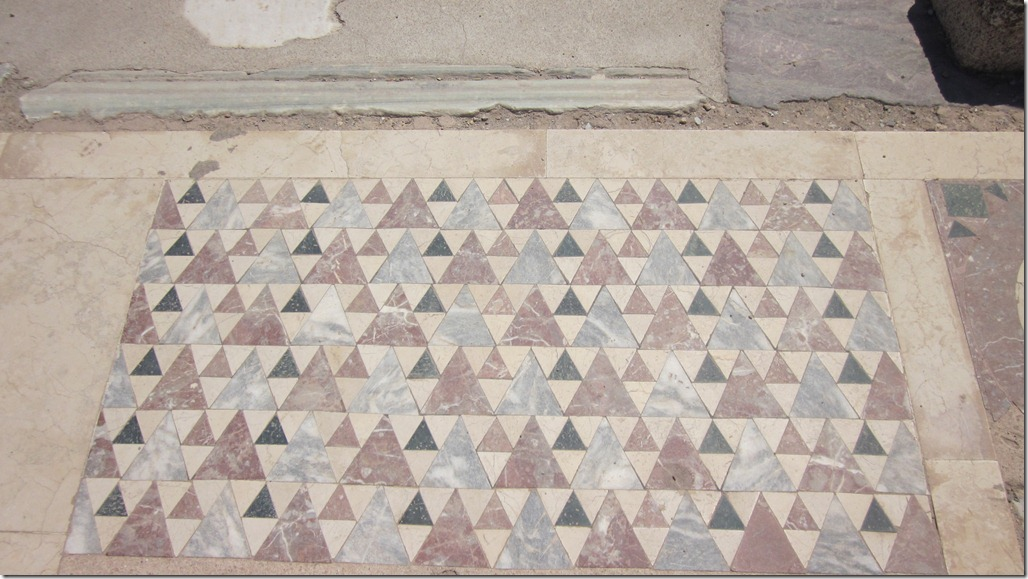
These
are the tesselating marble tiled floors
with which the area was constructed. These
have not been restored. |
|
|
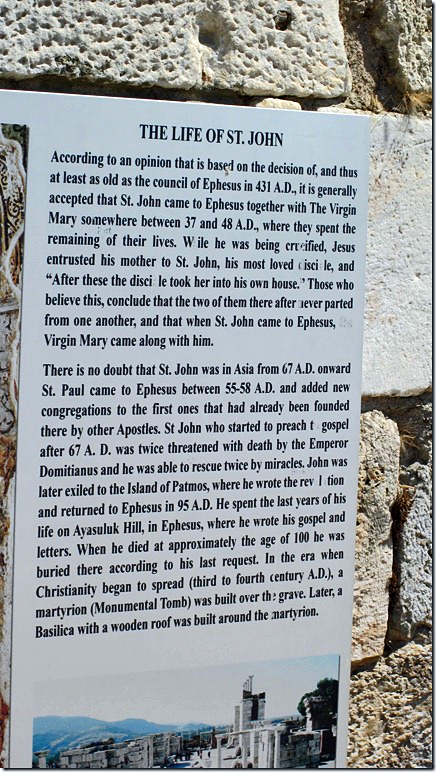 |
THE LIFE OF ST. JOHN According to an opinion that is based on the decision of, and thus at least as old as the council of Ephesus in 431 A.D., it is generally accepted that St. John came to Ephesus together with The Virgin Mary somewhere between 37 and 48 A.D., where they spent the remaining of their lives. While he was being crucified, Jesus entrusted his mother to St. John, his most loved disciple, and "After these the disciple took her into his own house." Those who believe this, conclude that the two of them there after never parted from one another, and that when St. John came to Ephesus, The Virgin Mary came along with him. There is no doubt that St. John was in Asia from 67A.D. onward St. Paul came to Ephesus between 55-58 A.D. and added new congregations to the first ones that had already been founded there by other apostles. St. John who started to preach the gospel after 67 A.D. was twice threatened with death by the Emperor Domitianus and he was able to rescue twice by miracles. John was later exiled to the Island of Patmos, where he wrote the revelation and returned to Ephesus in 95 A.D. He spent the last years of his life on Ayasuluk Hill, in Ephesus, where he wrote his gospen and letters. When he died at approximately the age of 100 he was buried there according to his last request. In the era when Christianity began to spread (third to fourth century A.D.), a martyrion (Monumental Tomb) was built over the grave. later, a Basilica with a wooden roof was built around the martyrion. |
|
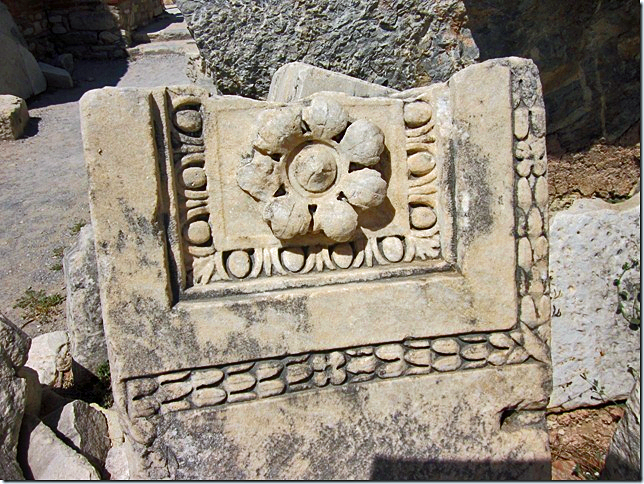
Part of the decorative stone work that adorned the church walls. |
|
The remains of a table presumably used for offerings. |
|
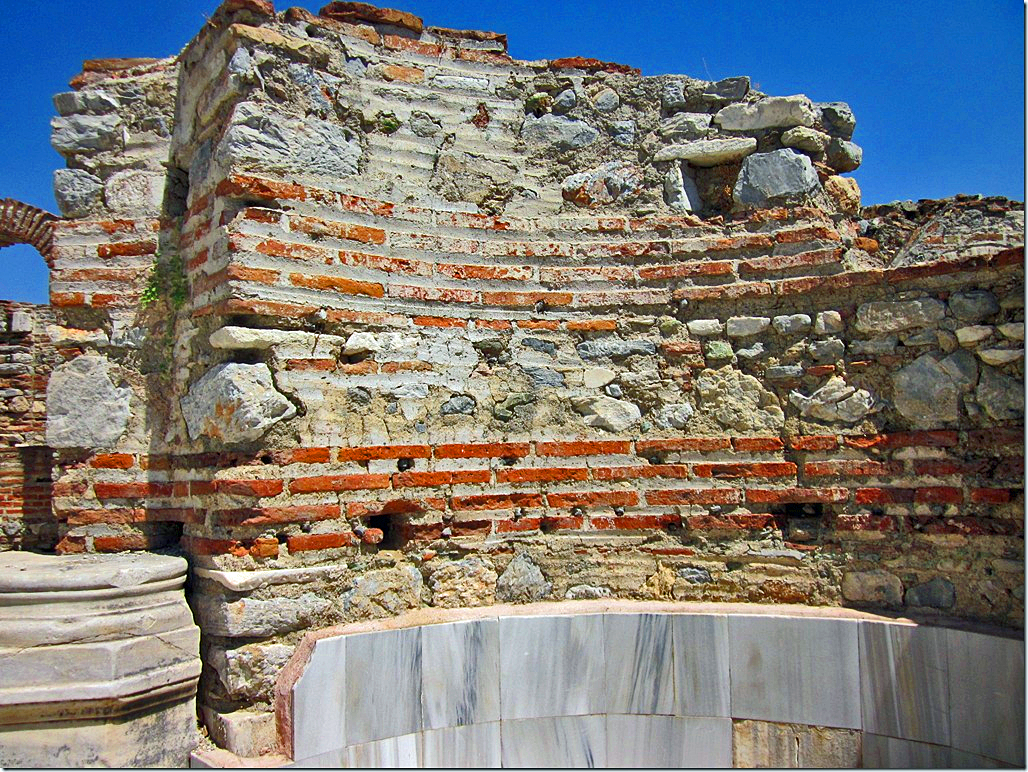
The original walls would not have been so crude, they would have been faced with white marble tiles as you see below. The original tiles were stolen many years previously. |
|
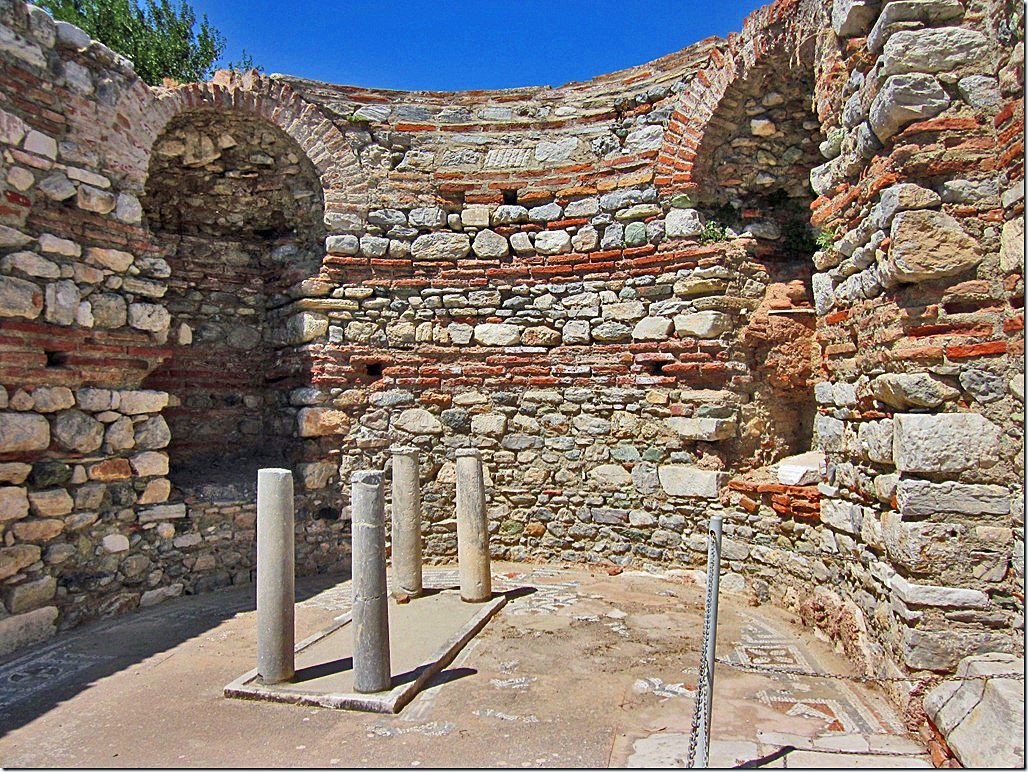
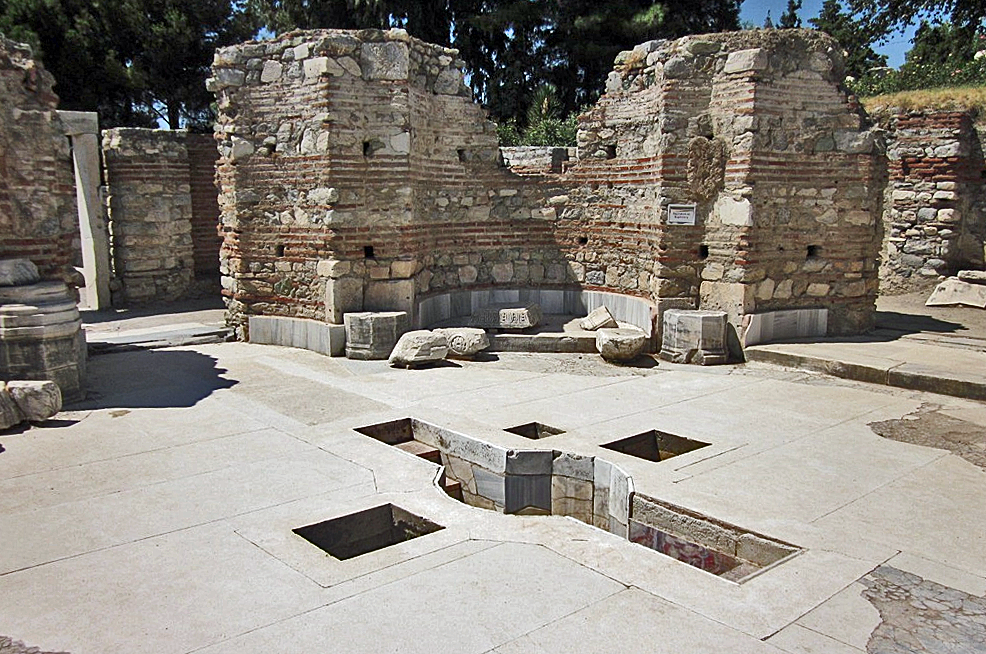
This is part of the Baptistery which was added in the 10th century, a very modern addition at around a thousand years old. |
|
To protect the church against violent Arab attacks in the 7th century, a fortification wall which extends to the fortress on top of Ayasuluk Hill was built. You can just see part of the wall extending up towards the fortress. |