

|
- Hampton Court - |
|
- Hampton Court - |



|
Hampton Court was passed to Henry VIII by Cardinal Wolsey in 1528. He was employed by Henry as his administrator. When Wolsey first acquired the building, it was more of a manor house which was owned and run by a holy order of monks. By 1528 Hampton Court resembled a palace; Wolsey had already added a chapel with a cloister for state processions in preparation for a visit from the French. Wolsey tried but failed to gain support from the French for Henry’s decision to divorce his first wife, Queen Katherine of Aragon because she failed to produce a male heir, only a daughter Mary. This was the beginning of the end for Wolsey, he was unable to persuade the Pope to annul the marriage. This displeased Henry who was furious with Wolsey, so Wolsey decided to offer Hampton Court as a peace offering to Henry but Henry charged him with treason and had him removed from his post. Henry often used ‘treason’ as a means of punishment for people who did not come up to the mark. Wolsey died of natural causes before he could be tried in London. |
|
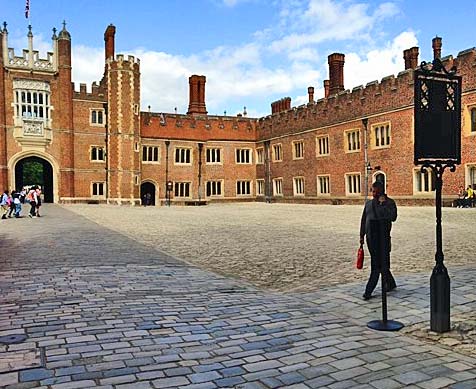
This is the entrance to Hampton Court Palace, built in Tudor style. Later a Baroque style palace was added onto the rear by Mary II and her husband William of Orange in the late 1600’s, making Hampton Court Palace to be of two parts: the front is of Medieval Tudor design and the rear is Baroque. |
|
This is a close up of the gate which is situated at the centre of the picture above. |
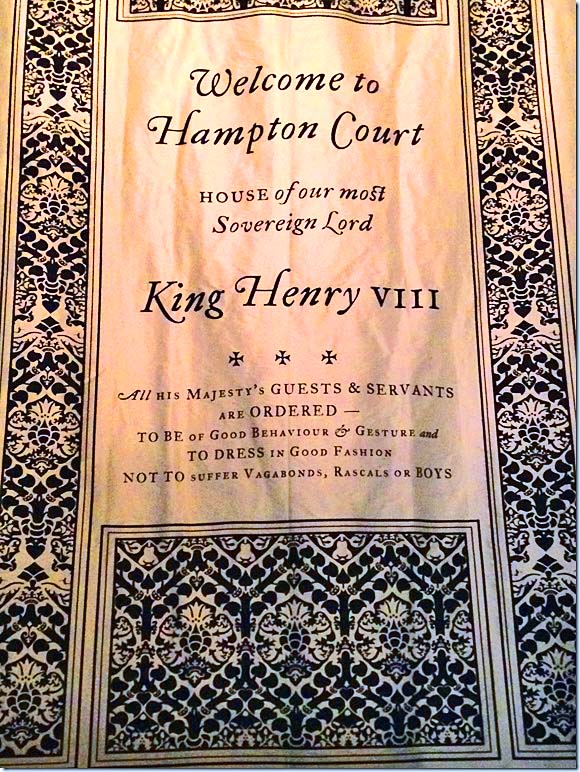
King Henry VIII had a few rules which were displayed at the entrance to the Hall. Other than that, most things were tolerated. |
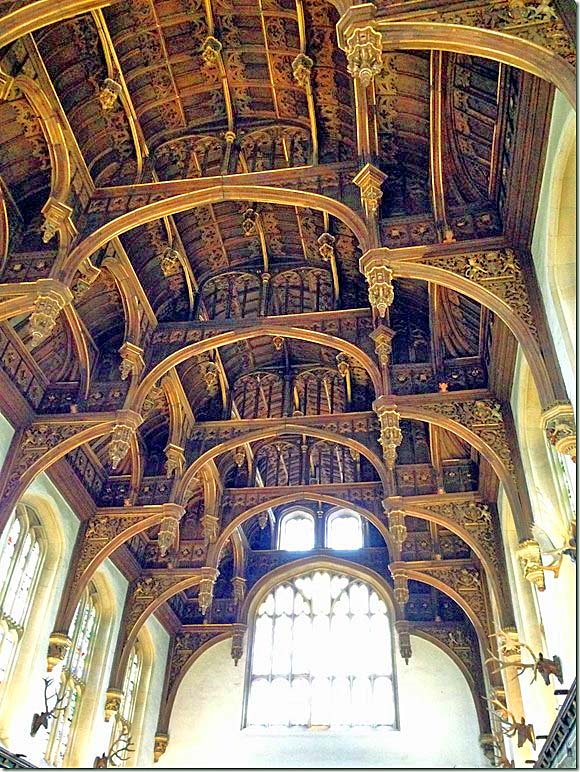
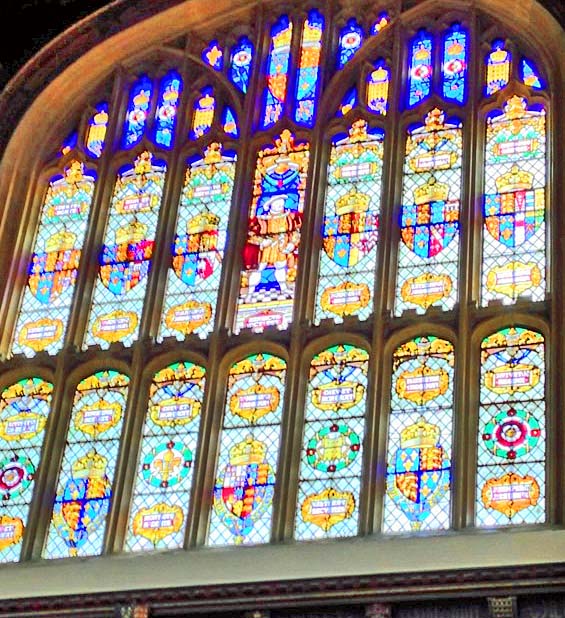
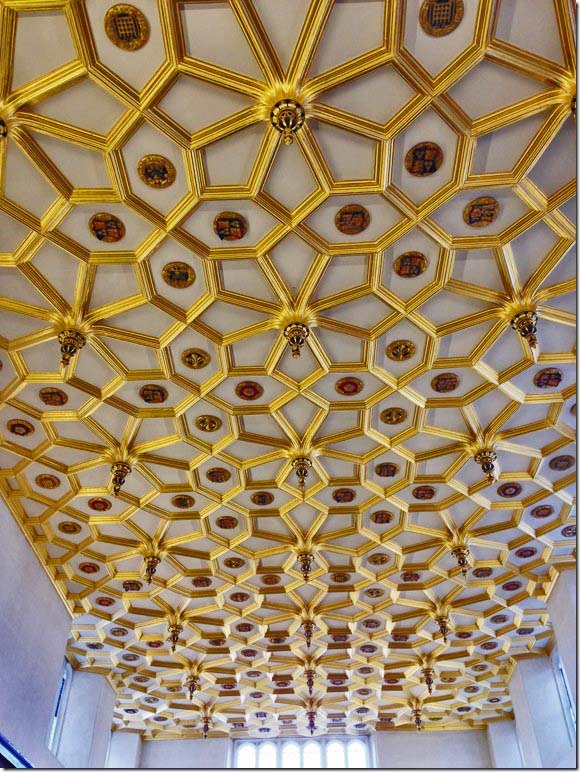
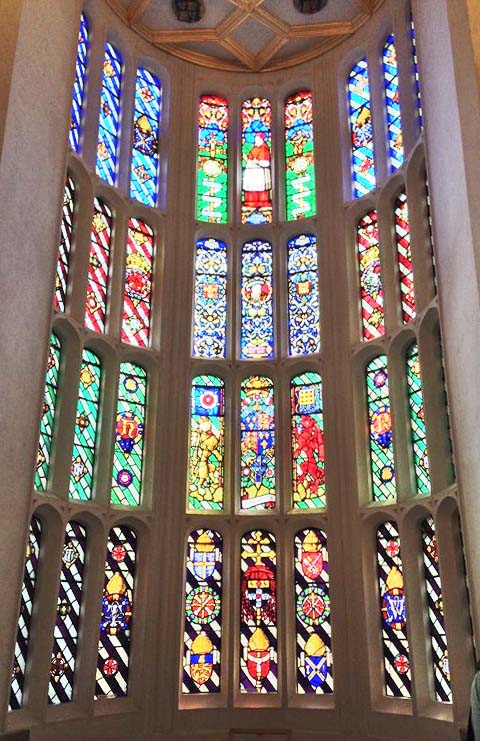
They ate from early in the morning to late in evening. Henry’s pride and joy was his banqueting hall, known as the Great Hall. Up to 600 people were fed here in one sitting and there were several sittings per day. It had a hammer beam roof, wall to wall tapestries and at each end of the hall a huge stained glass window with an inset of Henry’s image just to remind his guests of their host and the power that he wielded. |
|
A detail of the large stained glass window at the far end of the Great Hall. |
|
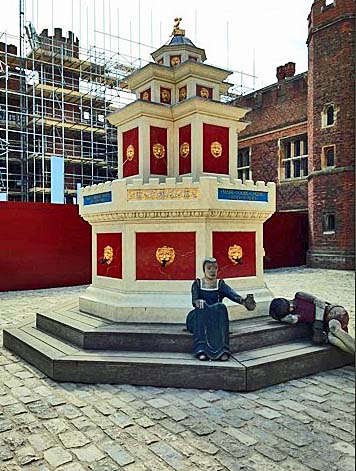
The wine was flowing and Henry had a wine fountain built in which wine flowed from the individual spout taps as the partying spilled out into the court yard. |
|
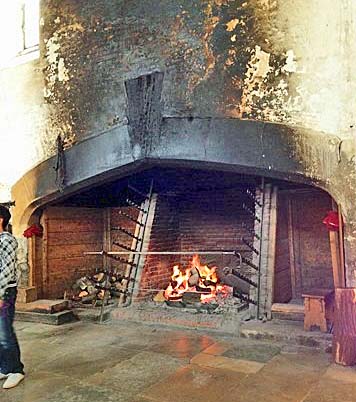
Entering and walking through the gate, you walk into the first court. It was surrounded by many rooms on all four sides which were used by Henry and his entourage. In all he had 60 palaces, they moved in, ate, drank and made merry, then moved on to the next palace when the stench of sewage became too strong. This gave the servants a chance to clean and tidy the palace up in preparation for his next visit. The diet was mainly meat and many carcasses were turned over these large kitchen fires. |
|
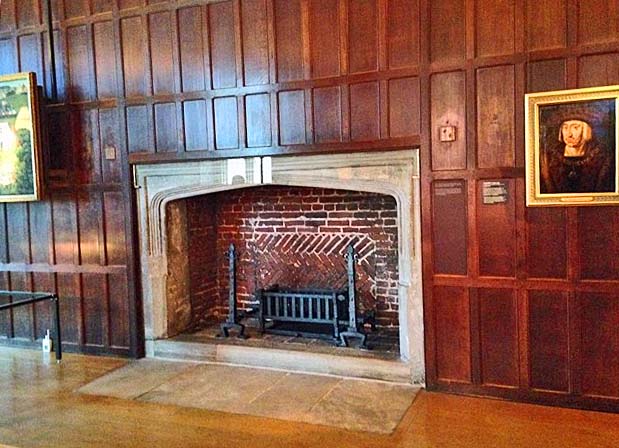
Numerous ornamental chimneys adorned the roofs which were connected to the vast amount of fire places used to keep his guests warm in the winter months. |
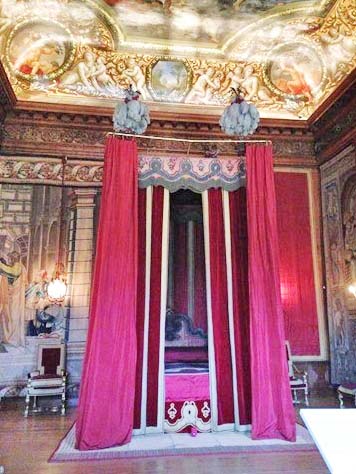
King William 3rd’s Apartments
All These Rooms Allow Photographs
|
- 1 - |
|
- 2 - |
|
- 3 - |
|
- 4 - |
|
- 5 - |
|
- 6 - |
|
- 7 - |
|
- 8 - |
|
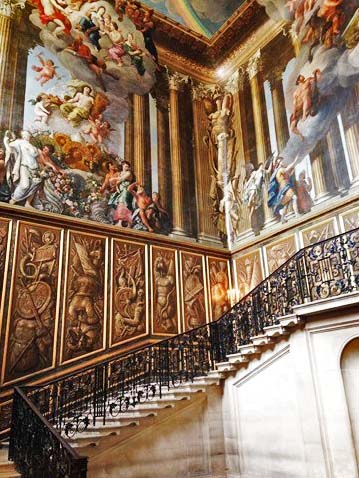
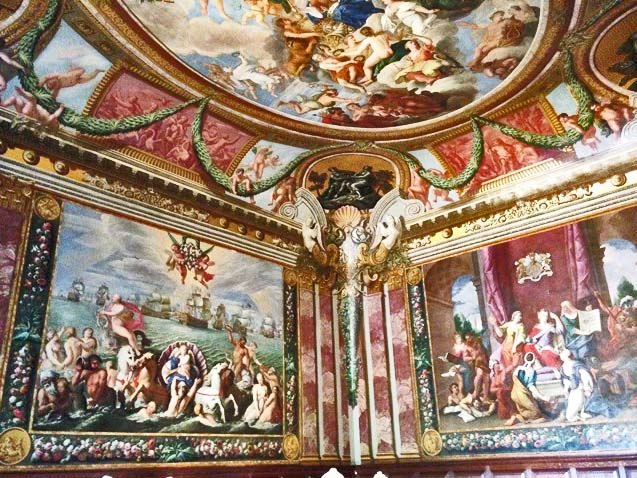
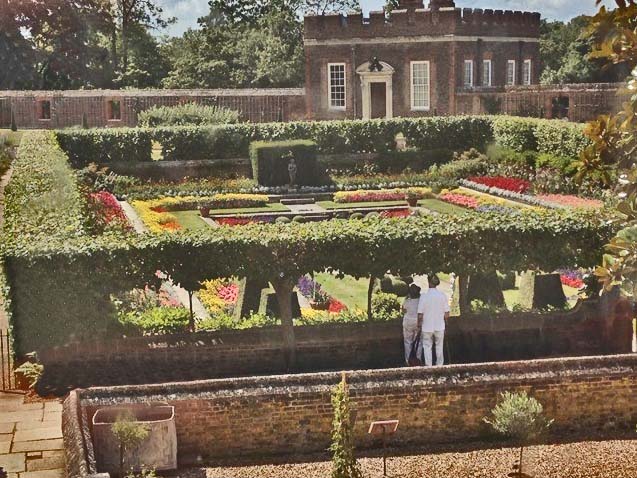
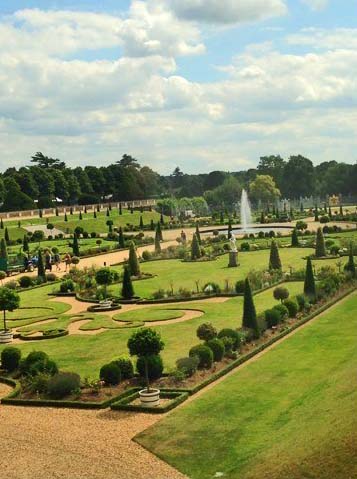
Rear Baroque Addition to Hampton Court for Mary II and William of Orange |